Robot integration and AI for industrial sites

Robots that respond. AI that watches and understands. People who stay in charge.

We deploy the robots, wire them into your CCTV, PLCs and MES, and add an AI layer that acts within limits you set.

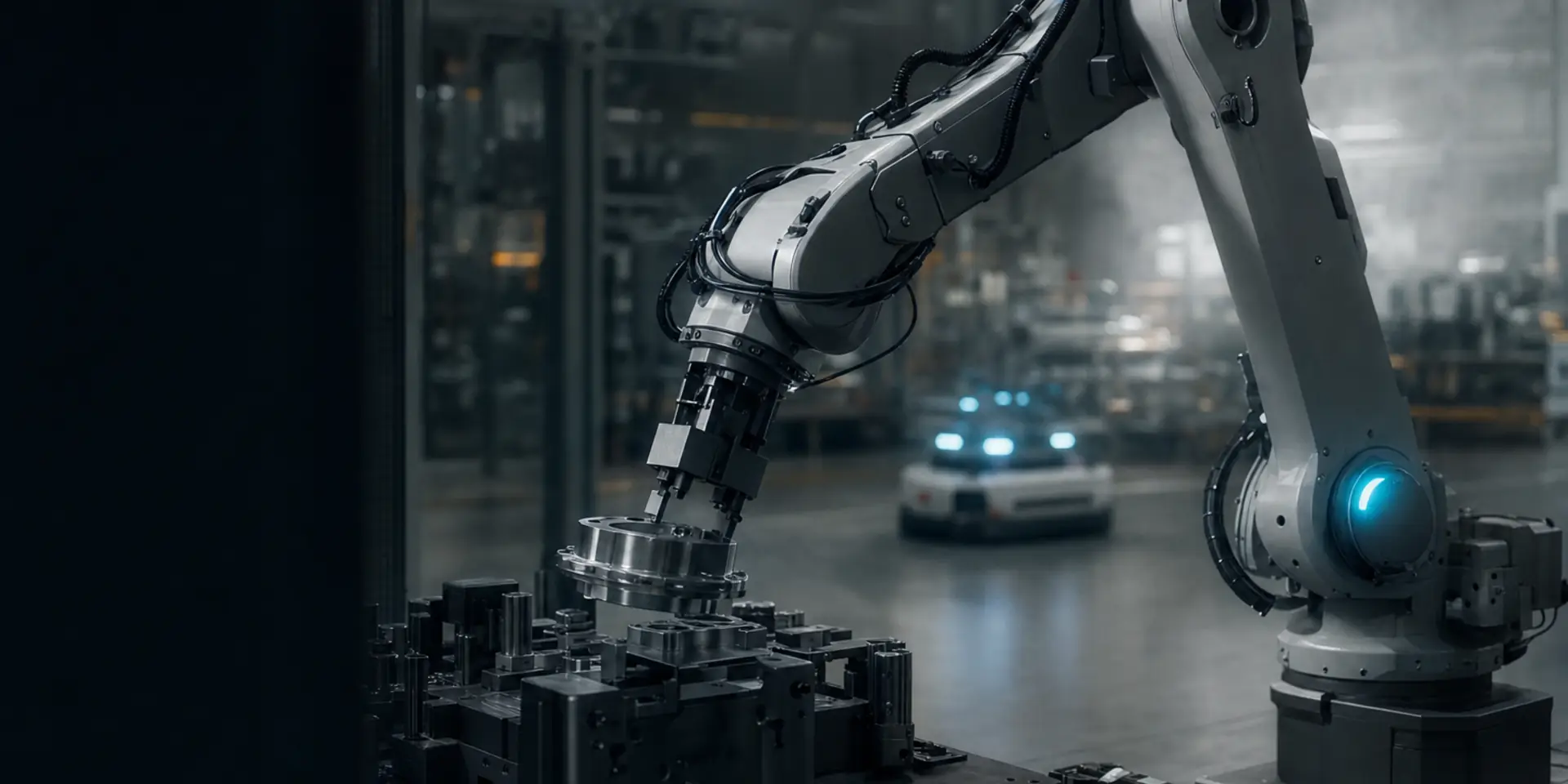
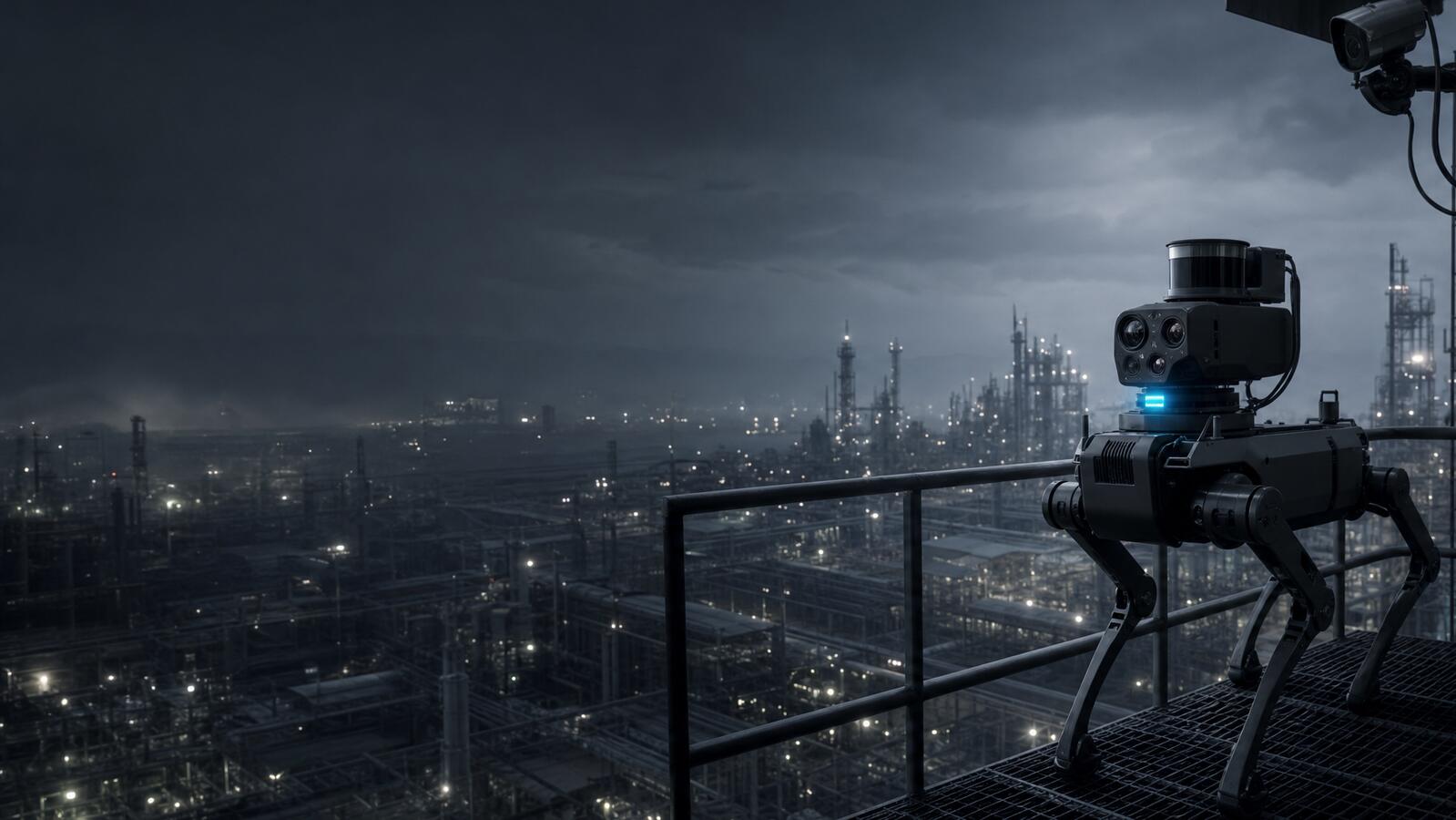
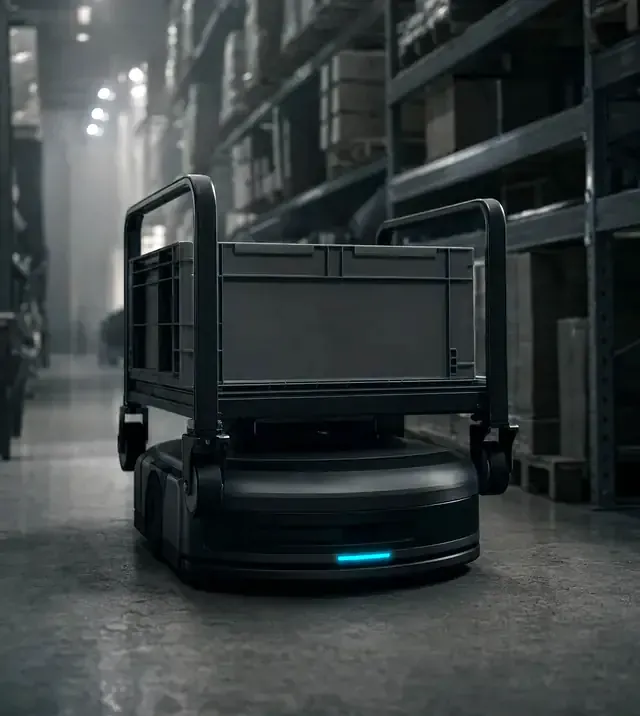
AI-generated image

Deploy

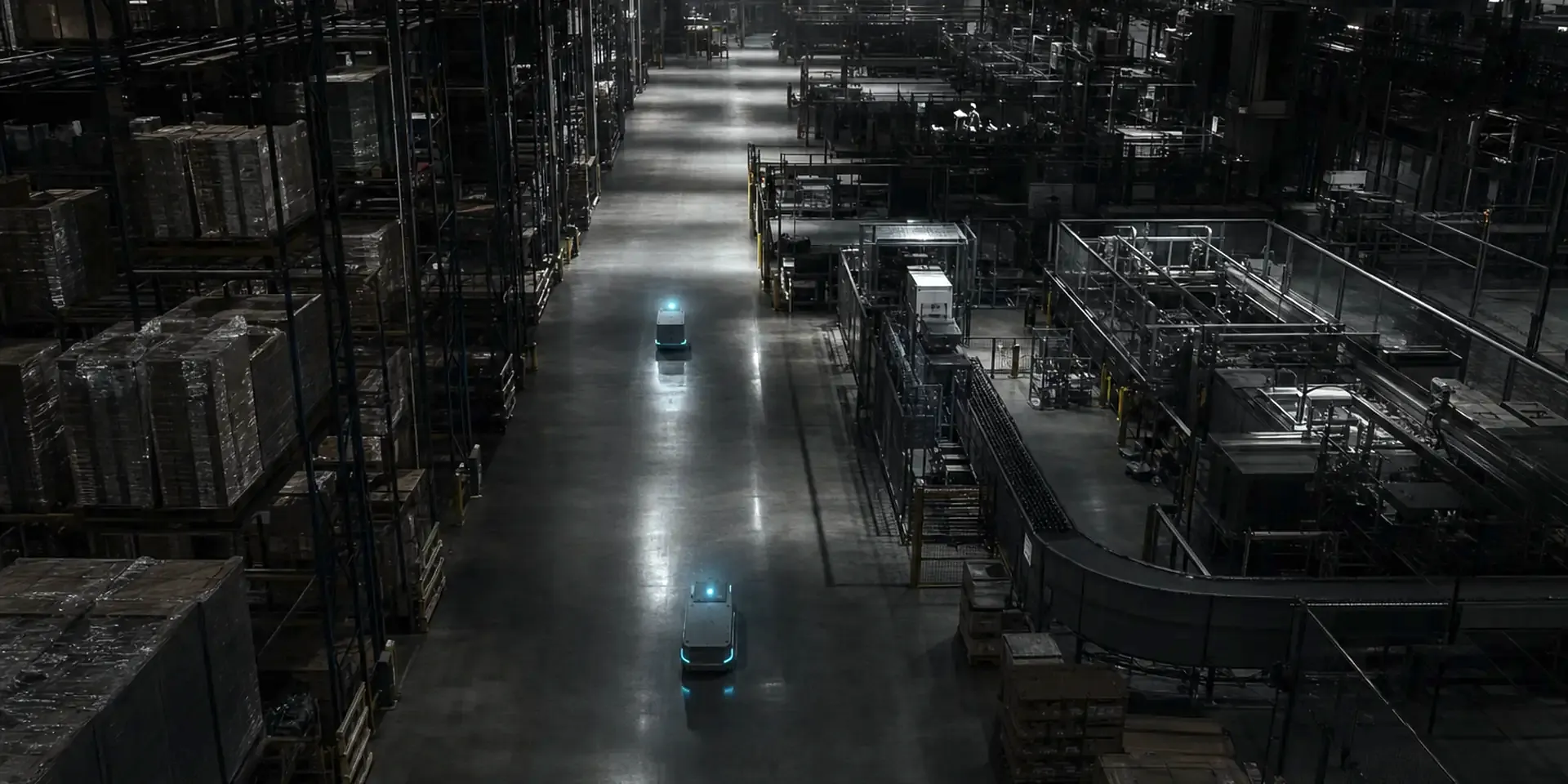
  • AMRs
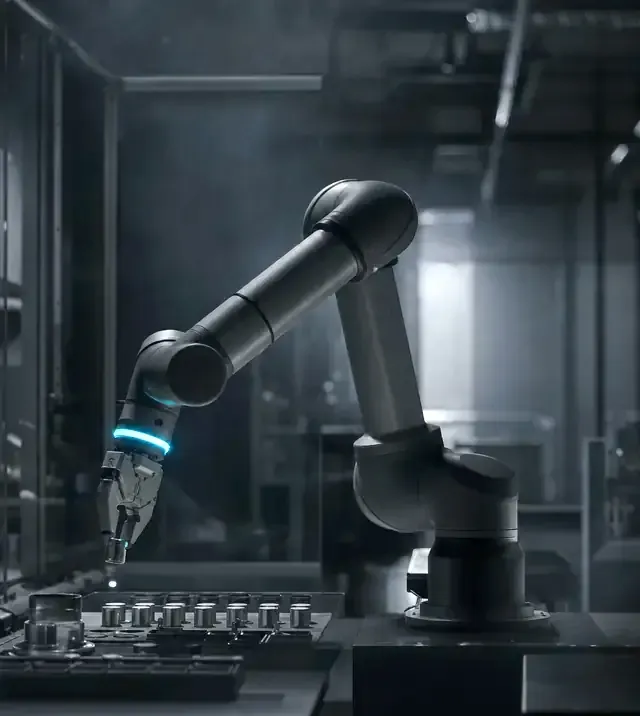
  • Arms and cobots
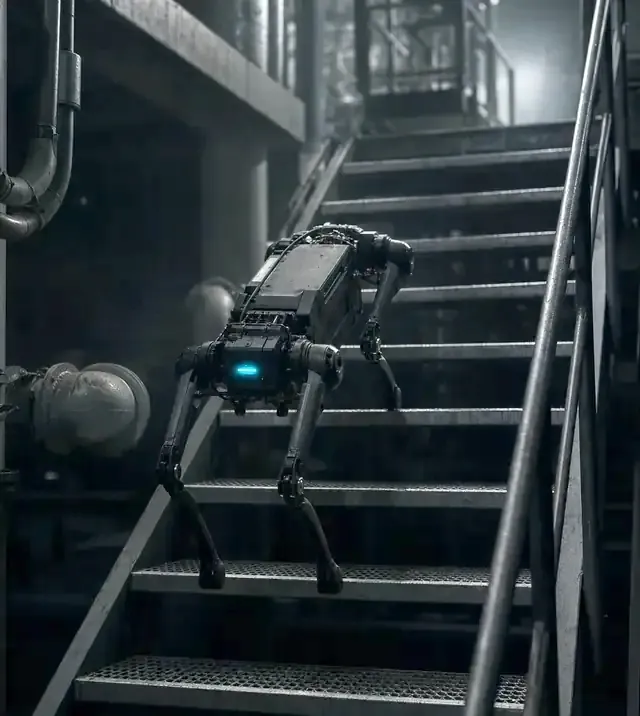
  • Quadrupeds
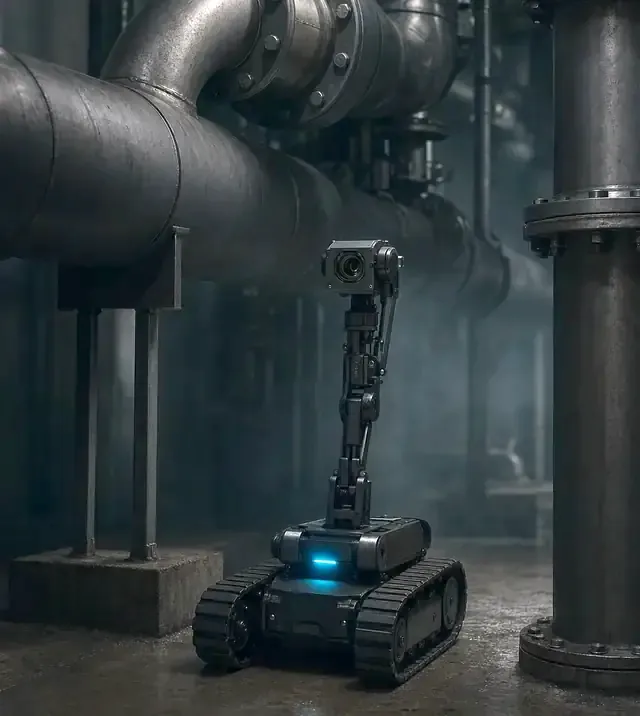
  • Inspection robots

Integrate

  • CCTV
  • PLC / SCADA
  • MES
  • WMS
  • ERP

Reason

  • Vision-language models
  • Rules you set
  • Human approval
  • Audit log

The problem

Your site sees a lot. It acts on very little.

Robots, cameras and control systems come from different vendors and different decades, and each works alone. The cost shows up as missed events, manual re-planning and operators buried in alerts.

  • Robots in islands.

    Every fleet has its own software, map and alerts. Nothing coordinates across them.

  • Cameras nobody watches.

    Streams are recorded, rarely reviewed. Video is evidence after the fact, not a live signal.

  • Data without action.

    MES, WMS and SCADA hold the context. Someone still has to spot it and act.

  • Alerts outpace people.

    Every new sensor adds notifications. Operators tune them out. The one that matters gets lost.

What's missing is the layer that connects it all and turns signals into action.

See the solutions

Solutions

Deploy. Integrate. Reason.
One accountable team.

From the robot on the floor to the action in your MES, with one owner when something breaks.

Site plan with a mixed fleet: AMRs on a route between racking and an arm cell, a quadruped patrol loop and an inspection route along a pipe run RACKING AMR ARM CELL QUADRUPED PATROL INSPECT

Deploy

Robot deployments

We select, deploy and commission robots for live sites: AMRs for intralogistics, arms and cobots for handling and quality, quadrupeds and inspection robots for patrols and hard-to-reach assets.

  • Selection matched to the task, not to one brand
  • Site survey, risk assessment, commissioning
  • Mixed-fleet coordination
  • Operator training and handover
  • Robots you already own, from any manufacturer
Cameras, controllers and robots wired through one integration bus into ERP, MES, WMS, SCADA and building systems CAMPLCROBOT ERPMESWMSSCADABMS

Integrate

Systems & CCTV integration

Your cameras become sensors. Your PLCs, MES, WMS and ERP become context and actuators. No rip and replace.

  • IP cameras and VMS via ONVIF and RTSP
  • OPC UA, Modbus, MQTT and vendor APIs
  • Events into MES, WMS, ERP, SCADA and ticketing
  • Access control, alarms and building systems
Video, telemetry, orders and alarms converging into one proposed action that asks for approval VIDEOTELEMETRYORDERSALARMS ACTION APPROVE?

Reason

AI reasoning layer

Vision-language and language models read video, robot telemetry and process data together. They pick out what matters and trigger the next step, within limits you set.

  • Policy-bound actions: dispatch a robot, open a work order, request a line hold, escalate
  • Human approval for anything consequential
  • One picture across video, sensors and process data
  • Every action logged with inputs and reasoning
  • AMRs

    Line feeding, pallet moves and tugging between cells.

  • Arms and cobots

    Handling, kitting and quality cells beside people.

  • Quadrupeds

    Patrols and inspection on stairs, grating and rough ground.

  • Inspection robots

    Fixed-route rounds: gauges, thermal and acoustic checks.

Imagery is AI-generated. It does not show client sites or specific robot products.

Video as a sensor

The cameras you already own. Finally put to work.

How it works

From signal to action. In one loop.

Autonomy where rules are clear. People where judgement matters.

  1. Sense

    Cameras, robots, PLCs and business systems stream video, positions, states, orders and alarms.

  2. Understand

    Vision and data models turn streams into events: a person in a restricted zone, a pallet in the wrong bay, a gauge out of range.

  3. Reason

    The AI layer weighs each event against schedules, procedures, history and policy, and works out what should happen next.

  4. Act

    Actions run through systems you already use: robot dispatched, work order opened, operator notified, line hold requested.

Human in the loop

You set what runs on its own, what needs approval and what always goes to a person. Every action is logged: who or what acted, and why.

Data flows from Sense to Understand to Reason to Act and back again, with a human approval layer across all four stages and an audit log beneath.

One event, end to end.

EVENT
Person in zone B2 · CAM-04
CONTEXT
Maintenance crew rostered on B2, 02:00–04:00
CONTEXT
AMR-07 route crosses B2 in 40 s
POLICY
HSE-12 · Reroute around rostered work: automatic, supervisor notified
ACTION
Reroute AMR-07 via aisle C · notify supervisor
Illustrative: the reasoning layer sees a person in a restricted zone, checks the roster and the robot's route, reroutes the robot automatically under policy and tells the supervisor. This runs without approval only in production, once the pilot has signed off this action type as automatic. Safety-rated scanners on the robot stay the protective layer.Deployment · Edge / on-premises / EU cloud

Have a site in mind? Tell us what runs there today.

Tell us about your site

Use cases

Where to start.

Each has a measurable target, set per site in discovery. We don't quote numbers before we've seen your data.

  • Logistics parkSecurity

    Perimeter and night patrol

    Cameras flag movement at the fence. The AI checks shift rosters and access logs, sends a quadruped to verify, and escalates to the control room when an intrusion can't be ruled out.

    Target fewer false-alarm dispatches, faster response

    CCTVthenAIthenQuadruped

  • ManufacturingOperations

    Intralogistics that follows the line

    AMRs feed the line. When MES signals a changeover or a starved station, missions re-prioritise automatically. No manual re-planning.

    Target fewer station starvation minutes and manual re-plans

    MESthenAIthenAMR fleet

  • ManufacturingQuality

    End-of-line visual quality

    Line cameras and a cobot work as one cell. Defects are classified, parts set aside, events linked to the batch in MES. Borderline cases go to a person.

    Target fewer escaped defects and manual inspection hours

    CamerathenAIthenCobot

More scenariosFewer scenarios
  • WarehousingHSE

    Context-aware safety zones

    Existing CCTV tracks people near forklifts and robots. Routine work is ignored; genuine risk triggers warnings and a slow-down request through the PLC. Safety-rated scanners stay the protective layer.

    Target fewer near-misses and unnecessary stops

    CCTVthenAIthenSlow‑down

  • EnergyMaintenance

    Critical-asset inspection

    An inspection robot reads gauges, thermal signatures and sound on a fixed route. Deviations become work orders, with images, ranked against the maintenance plan.

    Target more rounds completed, faster finding to work order

    RobotthenAIthenWork order

  • DistributionLogistics

    Yard and dock coordination

    Gate and dock cameras identify trucks and load status. The AI matches them to WMS bookings, assigns docks and flags mismatches.

    Target shorter truck dwell, fewer dock mismatches

    CamerathenAIthenWMS

Scenarios illustrate what the architecture enables. They are not past client projects.

Approach

Start small. Prove it. Scale.

Four steps, a decision gate after each. Nothing scales until a pilot proves value on your site.

  1. 01

    Discovery

    Typically 2–4 weeks

    We walk the site, map systems, cameras and processes, and pick one use case with a measurable target.

    OutputUse-case brief, architecture, success criteria.

  2. 02

    Pilot

    Typically 6–12 weeks

    One area, one workflow, live operations. People approve every action until you decide otherwise.

    OutputResults against criteria, go / no-go.

  3. 03

    Integration

    Typically 2–4 months

    Full integration, safety validation, policies, training, handover.

    OutputProduction system, runbooks, trained operators.

  4. 04

    Scale

    Ongoing

    New areas, sites and use cases reuse the same integrations and policies.

    OutputRoadmap, support, improvement.

Durations are typical ranges, not commitments.

Pilot first

Prove it on one cell. Then scale it across the site.

Principles

Engineered for the shop floor.

  • Safety systems stay in charge.

    Every deployment starts from a site risk assessment. We design to the relevant standards, such as ISO 10218 and ISO 3691‑4. The AI layer never overrides a safety-rated system.

  • Vendor-agnostic.

    Robots, cameras and models chosen for the job. Open protocols, so you are never locked in. Not even to us.

  • Edge and on-premises.

    Video and process data can stay on site. Models run locally when latency or confidentiality demand it.

  • EU data by default.

    Cloud means EU regions. Camera analytics are designed for GDPR from day one: defined purpose, minimal data, set retention.

  • Auditable.

    Every event, recommendation and action is logged with inputs, policy and approver. Any action can be reconstructed.

  • People in charge.

    Autonomy is a setting, not a default. You decide what runs alone, what needs approval, and what never does.

FAQ

Before you email us.

Do we need new cameras or systems?

Usually not. Most IP cameras, VMS platforms and industrial systems expose standard interfaces. If something can't be integrated, we tell you in discovery.

Do you supply the robots?

Both ways work. We recommend robots for your task, environment and existing fleet and procure them through their manufacturers, or we integrate robots you already own. We don't build robots and we don't sell one brand.

Does the AI act on its own?

Only where you allow it. Each action type is set to automatic, approval required, or human only. Safety stays with safety-rated systems and people.

Where does our data go?

Where you decide. The AI layer can run fully on-premises or at the edge. Cloud defaults to EU regions. Video stays on site unless you agree otherwise.

How is it priced, and how fast do we see results?

In stages, so you never commit to more than the next step. Discovery is scoped and quoted up front. The pilot typically runs 6–12 weeks against success criteria agreed in discovery; if it misses them, you stop there. Integration and ongoing support are quoted once the pilot has proved value.

Question not here?

Email a question

Contact

Tell us about your site. We'll tell you where to start.

Send a short note: your site, your systems, the problem to solve. We reply with a few questions and a suggested next step.

contact@sofiarobotics.com

Useful to include: site type, size, robots and cameras in place, the one task you want handled faster.